2026-08-20 · Mike Ellison
Groundwater Flooding Concerns for Davie Yards and Slabs
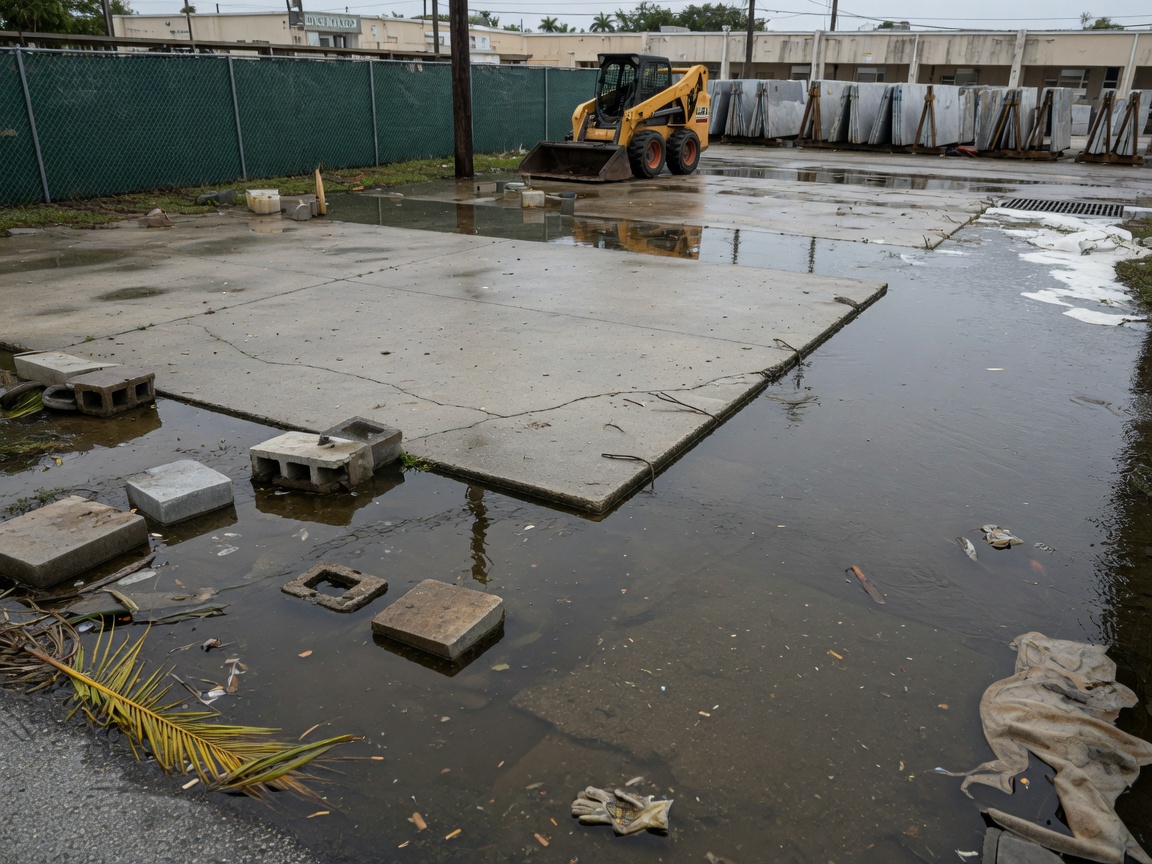
Davie properties often see groundwater rise within 2–4 feet of the surface during peak rainy months, pushing moisture into yards and beneath slabs on many homes built before 1990.
Davie's High Water Table and Seasonal Patterns
Davie sits in western Broward County with a shallow aquifer influenced by proximity to the Everglades. Rainy season from May through October delivers frequent downpours that saturate sandy soils and raise the water table quickly. Homes in neighborhoods like those along SW 36th Street or near the Davie canals experience standing water in yards for days after storms because natural drainage routes fill fast. Older slab foundations, common in 1970s–1980s construction, sit directly on grade and allow capillary action to pull moisture upward, leading to efflorescence on concrete and musty odors in lower rooms. Property owners notice grass thinning in low spots and mulch washing away as water moves laterally across lots.
How Groundwater Affects Yards in Davie
Yards in Davie often consist of flat lots with minimal slope, so water pools rather than runs off toward the street or retention areas. During prolonged wet periods, roots of St. Augustine grass stay saturated, inviting fungal growth and weakening turf. Soil compaction from heavy equipment or foot traffic reduces permeability, trapping moisture against foundation edges. Residents along State Road 84 or near Pine Island Ridge report repeated yard flooding when nearby canals back up, sending water across property lines. Installing French drains or regrading to create positive slope away from the house helps redirect flow before it reaches the slab edge.
Slab Foundation Concerns from Rising Groundwater
Concrete slabs in Davie homes can develop hairline cracks when hydrostatic pressure builds underneath during high-water events. Moisture migrates through the slab, raising indoor humidity and promoting mold on baseboards or carpet padding. Many properties near the Water Intrusion Risks Near the Everglades in Davie show recurring damp spots in garages and utility rooms after heavy rains. Soil expansion and contraction cycles around the slab perimeter stress the concrete over time, widening existing cracks. Checking for white mineral deposits on the slab surface or doors that begin to stick signals ongoing moisture movement that requires attention before damage spreads.
Practical Steps for Davie Homeowners
Monitor yard drainage after each storm and clear debris from swales and catch basins near the property. Add 4–6 inches of clean fill in low areas to improve slope, then top with new sod. Seal visible slab cracks with epoxy or polyurethane injections rated for below-grade use. Keep gutters and downspouts clear so roof runoff travels at least 5 feet away from the foundation. For persistent issues, consult local restoration teams that understand Broward County soil and permitting requirements. When flooding reaches living spaces, prompt water damage restoration prevents secondary mold growth. Links to related guidance on sewage backup response in Davie flood zones and moisture-resistant materials for renovations offer additional targeted steps.
When to Call Local Restoration Help
If water remains in the yard more than 48 hours or dampness appears inside along baseboards, contact a Davie-based team operating 24 hours at 13762 W State Rd 84 Ste 390. Technicians familiar with local canal systems and slab construction can assess moisture levels with meters and extract water before it migrates further. Early intervention limits the scope of repairs and protects both yard landscaping and the home's structural integrity.