
2026-08-20 · Mike Ellison
Drying Wet Crawlspaces in Davie High Humidity Conditions
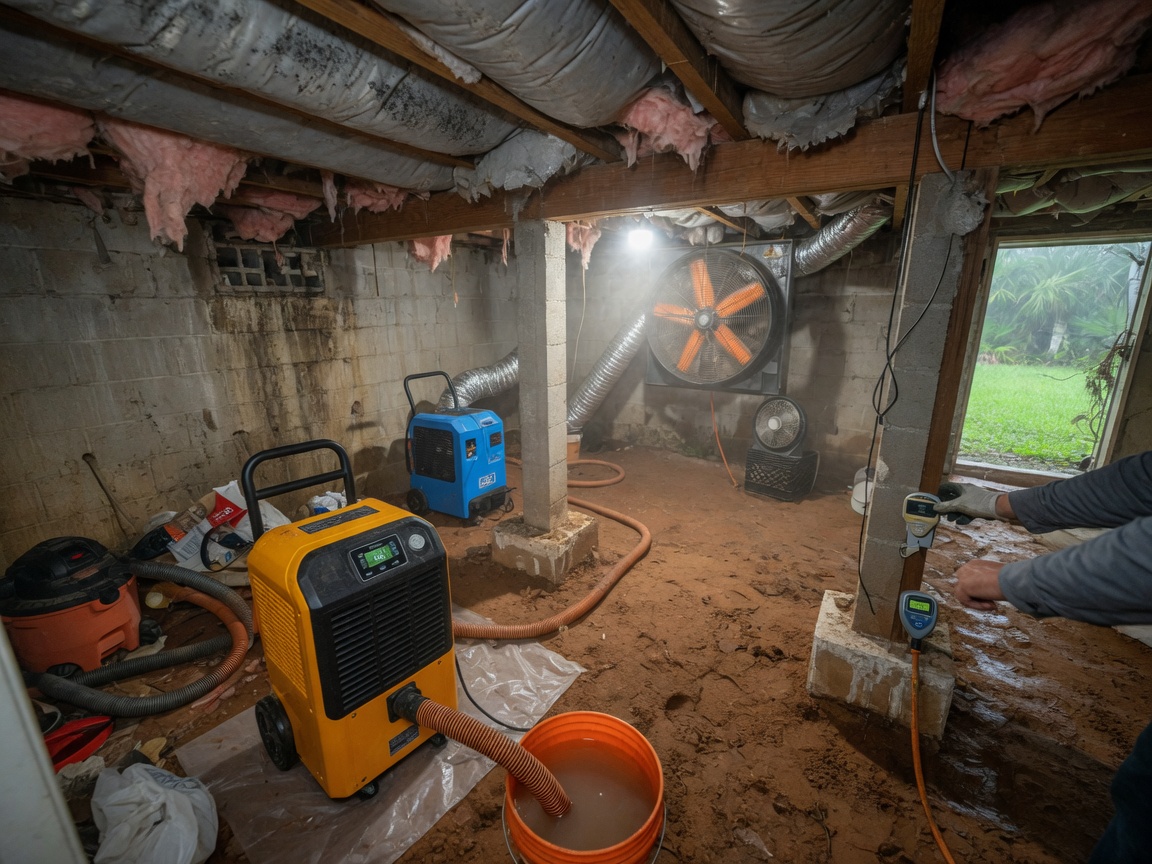
Drying wet crawlspaces in Davie's high humidity conditions typically requires 5–10 days of continuous dehumidification and airflow when using commercial-grade equipment sized for the space. Davie homes often sit on shallow foundations where moist air from surrounding wetlands and frequent summer rains seeps in, raising relative humidity above 70 percent for weeks at a time. Proper drying starts with isolating the crawlspace, removing standing water, and running dehumidifiers that pull 70–150 pints per day while maintaining 45–55 percent relative humidity.
How Davie Humidity Affects Crawlspace Moisture
Davie’s subtropical climate delivers consistent moisture from Gulf Stream influence and afternoon thunderstorms that drop 2–4 inches of rain in a single event. Many homes built before 1990 in neighborhoods near the Everglades have vented crawlspaces that pull in humid outdoor air, allowing wood joists and insulation to absorb moisture. When relative humidity stays elevated, mold colonies form on subflooring within 48–72 hours. Crews address this by sealing vents temporarily and installing plastic sheeting to create a controlled environment before introducing drying equipment.
Equipment and Steps for Effective Drying
Restoration teams begin by extracting any pooled water with submersible pumps, then place air movers at 45-degree angles along joists to create cross-ventilation. Desiccant or LGR dehumidifiers run continuously, with daily moisture readings taken on wood members using pin meters to track progress down to 12–14 percent moisture content. In larger crawlspaces under 2,000-square-foot homes common along State Road 84, multiple units may operate for a week. Structural Drying Services teams monitor temperature differentials to prevent condensation on cooler surfaces.
Preventing Recurrence After Drying
Once dry, installing a sealed vapor barrier and a dedicated crawlspace dehumidifier keeps humidity below 55 percent year-round. Homes near Plantation and Cooper City benefit from tying the unit into existing HVAC returns when possible. Checking for groundwater seepage after heavy rains also helps; see related guidance in Groundwater Flooding Concerns for Davie Yards and Slabs. Regular inspections every six months catch small leaks before they saturate insulation again.
When Mold Appears Alongside Moisture
Persistent dampness in Davie crawlspaces frequently leads to mold on rim joists and ductwork. In these cases, remediation follows drying and includes HEPA vacuuming plus antimicrobial application on affected surfaces. Homeowners in areas like Dania Beach and Hollywood often combine this step with Mold Remediation to avoid future air-quality issues. Addressing both moisture and growth in one project prevents callbacks during the next rainy season.
Local Conditions That Change the Job
Sandy soils around Davie drain quickly on the surface yet trap humidity beneath slabs and crawlspaces because of shallow water tables. Summer storms from June through October can push humidity spikes that last 10–14 days, requiring longer equipment runtime than winter months. Older homes near the Davie rodeo grounds and along University Drive often have limited access points, so technicians use flexible ducting to reach distant corners without disturbing landscaping. These factors make site-specific assessment essential before equipment placement.