2026-08-20 · Mike Ellison
Preventing Mold Growth After Summer Storms in Davie
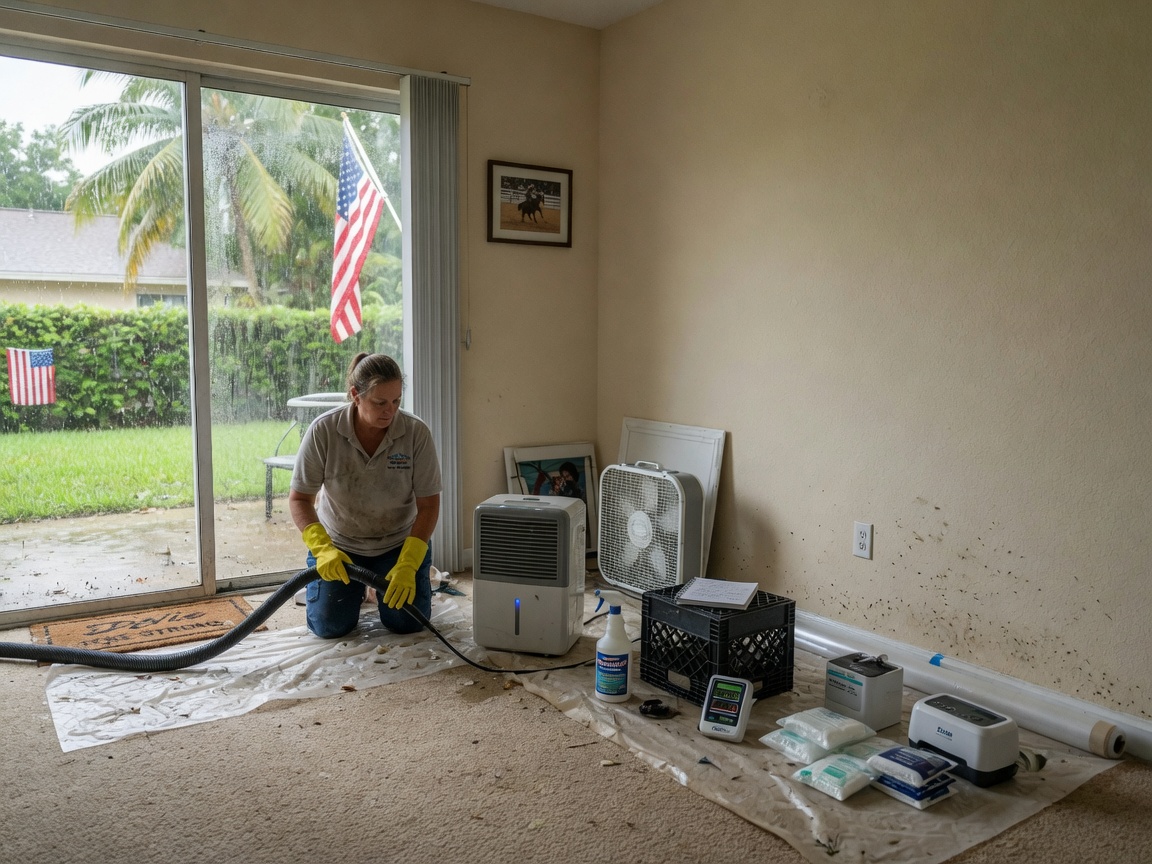
Mold can begin growing in Davie homes within 24 to 48 hours after water enters from summer storms. Quick extraction of standing water followed by targeted drying stops spores from taking hold in drywall, insulation, and wood framing common in local single-family houses built on slabs.
Removing Standing Water Right Away
After a storm passes through Davie and nearby Cooper City, water pools in yards and seeps under doors or through roof edges. Use a wet vac or pump to pull water from floors within the first few hours. Focus on low spots near garages and laundry rooms where moisture lingers longest. Homeowners in neighborhoods along State Road 84 often see water enter through window sills during heavy afternoon downpours. Once visible water is gone, lift rugs and move furniture to let air reach wet surfaces. Delaying this step lets moisture wick into baseboards and subfloors, creating hidden pockets that feed mold later. Water Damage Restoration crews bring commercial extractors that reach deeper into carpet padding than household tools.
Thorough Drying and Air Movement
Florida humidity in Broward County keeps surfaces damp long after rain stops. Run industrial air movers and dehumidifiers pointed at wet walls and ceilings for several days. Check under kitchen cabinets and behind toilets where storm water often travels through plumbing chases. In older Davie homes, plaster walls hold moisture differently than newer drywall, so drying times vary by construction year. Measure moisture with a meter until readings match unaffected areas. Skipping full drying leaves relative humidity above 60 percent, the level that lets mold colonies expand on wood framing. Structural Drying Services focus on these hidden zones that homeowners cannot reach with box fans alone.
Monitoring and Controlling Indoor Humidity
Keep indoor humidity between 45 and 55 percent during the weeks after a storm. Place digital hygrometers in each room and record readings twice daily. Run the central air conditioner longer during muggy evenings common in Davie summers. Empty refrigerator drip pans and clean condensate lines so they do not add extra moisture. Attics above single-story homes often trap heat and humidity after roof leaks, so inspect insulation for damp spots before closing access panels. When readings stay elevated, open windows only if outdoor air is drier than inside air. Consistent monitoring catches rising moisture before visible mold appears on ceilings or in closets.
Inspecting Hidden Areas Prone to Mold
Check crawl spaces, if present, and attic insulation after every major storm. Water that enters through roof vents can soak batts without showing on ceilings right away. In Davie properties near canals or low-lying streets, foundation edges collect runoff that wicks upward into stucco. Peel back a small section of baseboard in affected rooms to inspect for dark spots on the drywall paper. Document any discoloration with photos before it spreads. Early detection in these spots prevents the need for larger repairs later. Mold Remediation addresses growth that has already started behind surfaces.
When to Call Local Restoration Help
If water sat for more than 24 hours or reached multiple rooms, contact a Davie-based team that operates 24 hours at 13762 W State Rd 84 Ste 390. They bring equipment sized for Florida storm volumes and know how local building codes affect drying plans. Homeowners in Plantation and Weston often share similar slab and roof details, so crews familiar with those patterns finish jobs faster. Follow-up visits confirm moisture levels have returned to normal before any reconstruction begins.