
2026-08-20 · Mike Ellison
Fixing Burst Pipes in Pre-1980s Davie Houses
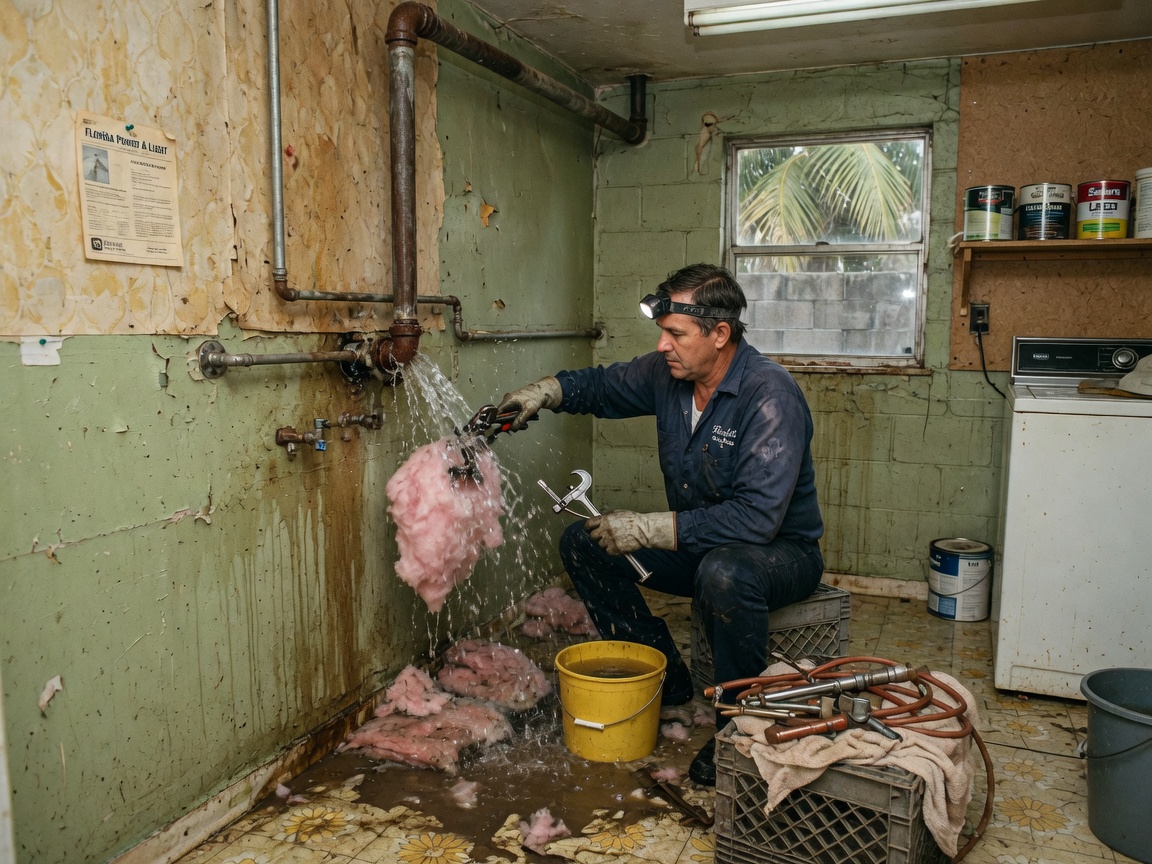
Pre-1980s Davie houses commonly experience burst pipes from corroded galvanized steel lines that have reached the end of their 40- to 60-year lifespan. Homeowners in neighborhoods near State Road 84 and along the edges of the Everglades typically see failures during sudden pressure spikes after heavy rains or brief cold snaps that cause contraction in aging joints. Immediate shutoff of the main valve followed by professional water extraction limits secondary damage to drywall and subfloors that are common in these ranch-style properties.
Spotting Corrosion in Galvanized Systems
Homes built before 1980 in Davie frequently contain galvanized steel pipes installed when the area shifted from agricultural to residential use. These pipes develop interior rust that narrows the diameter and creates weak spots at threaded joints. Visible signs include reddish-brown water from faucets, reduced flow at showers, and damp patches along slab edges where pipes run underground. In Davie’s sandy soil, external corrosion accelerates because moisture lingers longer than in clay-heavy areas farther east. Checking under sinks and in crawl spaces every six months catches pinhole leaks before they become full bursts. Replacement with copper or PEX becomes necessary once multiple leaks appear within a two-year span.
Repair Steps for Slab and Wall Leaks
Locating the exact break requires electronic leak detection because many pre-1980s Davie homes have pipes embedded in concrete slabs. Once isolated, the line is cut back to sound material and fitted with a shark-bite or soldered coupling rated for the home’s 60- to 80-psi static pressure. For wall cavities, damaged drywall is removed in 2-foot sections to allow full drying before new pipe is run along the exterior wall to avoid future slab work. After repair, the system is pressure-tested at 100 psi for 30 minutes to confirm no additional weak points exist. Homeowners in Cooper City and Plantation often combine this work with repiping the entire hot-water loop to prevent repeat failures in the same age group of homes.
Weather and Soil Factors Unique to Davie
Davie’s subtropical climate brings intense summer thunderstorms that raise groundwater levels and increase hydrostatic pressure on buried lines. Occasional winter lows in the mid-30s cause contraction in older galvanized sections that already have scale buildup. The area’s high water table means any leak quickly saturates the sandy fill around foundations, leading to settling cracks that stress remaining pipe runs. Properties near the C-11 canal or in low-lying sections of Davie experience faster corrosion rates than homes on higher ground toward Weston. Scheduling annual inspections before hurricane season helps identify joints already compromised by decades of mineral exposure.
When Professional Water Damage Restoration Is Required
A single burst in a pre-1980s Davie kitchen or bathroom can release 5–10 gallons per minute, soaking cabinets and flooring within minutes. Water damage restoration crews use moisture meters and infrared cameras to map hidden saturation behind tile and under vinyl that slab leaks often produce. Structural drying with commercial air movers and dehumidifiers prevents mold in the humid local air, which can begin growing within 48 hours. For larger events, water damage repair includes removing and replacing saturated baseboards and subfloor sections that are typical in 1970s construction. Homeowners can review insurance claim tips for water damage in Davie to document the scope before repairs begin.
Long-Term Prevention and Monitoring
Installing a whole-house water pressure regulator set to 55–60 psi reduces stress on remaining galvanized sections. Adding flexible stainless-steel supply lines to toilets and washing machines eliminates the rigid connections that crack first during pressure surges. In Davie’s older subdivisions, many owners now schedule full repiping during kitchen or bath remodels to avoid emergency calls during holiday weekends. Annual checks of the main shutoff valve ensure it still turns freely, a common failure point in homes over 45 years old. These steps extend the life of the remaining original plumbing while protecting against the next seasonal pressure event.